


High quality backlinks are still one of the strongest ranking signals in Google.
That has not changed.
What has changed is what Google actually considers a high quality backlink.
I see people waste time and money on links that look good on paper but do nothing. I also see simple links move rankings when done right.
I want to break this down clearly.
What matters, what does not, and how you can approach high quality backlinks without overthinking it.
Step 1: Understand Why High Quality Backlinks Still Matter
Google has said for years that links help them understand authority and relevance.
That is not opinion. That is straight from Google.
In their own documentation, Google explains how links are used as signals of trust and importance. You can see this clearly in Google’s original PageRank concept and how it evolved.
Here is a solid breakdown from Google Search Central on how links work in ranking systems:
How Search Works
Independent studies back this up.
Ahrefs analyzed over one billion pages and found that pages with more backlinks tend to rank higher. The correlation is not small. It is strong.
Ahrefs study on backlinks and rankings
So yes. High quality backlinks still matter.
The mistake people make is focusing on the wrong qualities.
Step 2: What Actually Makes a Backlink High Quality

When I look at a backlink, I care about a few things. Not twenty metrics. Just the ones that move the needle.
Here is what consistently matters.
1. Relevance Beats Everything
A relevant link almost always beats a random high authority one.
If your site is about SEO and digital marketing, a link from a marketing blog carries more weight than a link from a general news site that never talks about SEO.
Google has patents that reference topical relevance and how closely content connects across the web.
Google patent on topic-sensitive PageRank
This lines up with what I see in real campaigns.
Relevant links index faster.
They stick longer.
They pass stronger signals.
2. Editorial Placement Matters
Links placed naturally inside content matter more than links dumped in footers or author boxes.
This has been tested repeatedly.
Moz ran experiments showing that editorial links placed within main content pass more value than boilerplate links.
Moz research on link placement
When a link exists because someone chose to reference your page, Google trusts it more.
Simple as that.
3. Real Traffic Is a Strong Signal
I like links from pages that actually get visitors.
Not because traffic magically transfers, but because traffic is a proxy for quality.
Ahrefs explains this clearly in their breakdown of link quality. Pages with traffic tend to be indexed, crawled, and trusted.
Ahrefs guide to link quality
If a page never gets traffic, it is often ignored by Google over time.
Step 3: What Does Not Matter Anymore

This is where most people get it wrong.
1. Domain Authority Alone
DA is a third party metric. Google does not use it.
I use it as a rough filter, not a goal.
Google has confirmed they do not use metrics like DA or DR.
Google statement on domain authority
High quality backlinks come from context, not scores.
2. Exact Match Anchor Text
Exact match anchors used to work.
They also caused penalties.
Google’s Penguin update was built to target unnatural anchor patterns.
Google Penguin update overview
Today, natural anchors win.
Brand names.
Partial phrases.
Plain URLs.
That is what I aim for.
3. Link Volume Without Strategy
More links does not mean better results.
A handful of strong, relevant links often beats hundreds of weak ones.
I have seen this repeatedly in competitive niches.
Step 4: A Simple Process I Use for High Quality Backlinks
This is the same framework I use across client campaigns.
You can apply it too.
- Identify pages that already rank on page two or three
- Build links only to those pages
- Focus on relevance first
- Keep anchor text natural
- Track indexing and movement, not just link count
This sounds harder than it is.
Once you do it a few times, it becomes repeatable.
Step 5: Getting Help Without Losing Control

Link building takes time.
- Outreach.
- Content placement.
- Quality checks.
If you want to skip the busy work without risking spam, this is where a managed approach helps.
Rankifyer
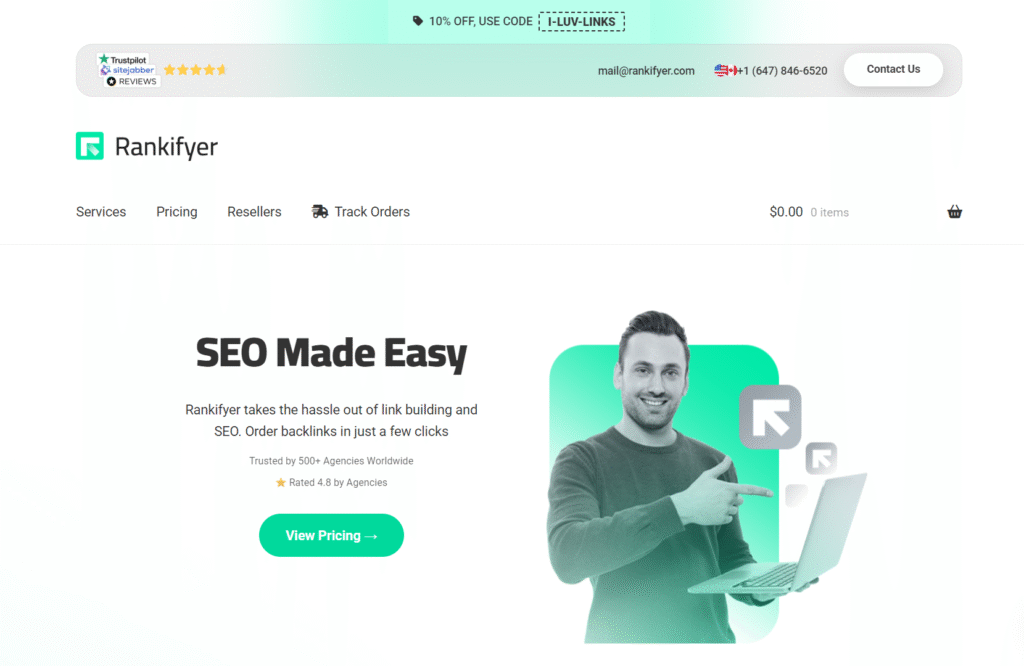
I recommend Rankifyer because they focus on real placements, relevance, and clean execution. Not shortcuts.
They handle the outreach, writing, and placement while keeping things white label and simple for agencies and site owners.
If you want to see how that works in practice, you can review their approach here:
Rankifyer link building services
No pressure.
Just an option if you want consistency without burning time.
Final Thought
High quality backlinks are not complicated.
They are just misunderstood.
- Focus on relevance
- Focus on placement
- Ignore vanity metrics
If you do that, rankings follow.
I have seen it too many times to doubt it.

Will is an SEO specialist with 10+ years of experience in link building, content marketing, and digital growth. He’s led strategies for agencies, startups, and SaaS brands.